If you’re doing AI-related work, whether it’s on your smartphone or in a data center, you’ve probably noticed one thing: the bigger your input datasets, the better your results. As more data becomes available, the challenge is not just about building smarter models, but also about having the system storage to handle it all. It’s in this case where high-capacity SSDs are becoming essential.
AI workflows are data hungry. From ingesting raw information to transforming, training, and finally making predictions (inferences), each stage of the AI workflow challenges system storage to keep the GPUs and CPUs fed with data. If your HDDs and SSDs can’t deliver the storage capacity and performance, your expensive compute resources sit idle. As such, high-capacity SSDs are designed to pack more storage into smaller spaces without blowing your power budget.
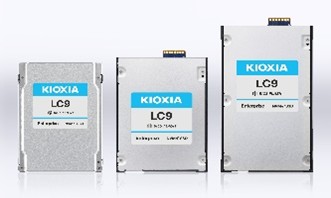
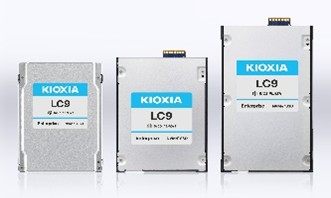
With advances in flash memory, such as quad-level cell (QLC) technology, you can now get SSDs with capacities ranging from 30 terabytes1 (TB) to a staggering 245 TB, all in the same form factor and power envelope. As 30 TB capacities have been the high-end for SSDs over the past few years, 245 TB capacities significantly change the game for anyone building AI systems. Think about it, a 24-slot 2.5-inch server can provide almost 6 petabytes1 (PB) of storage capacity, a 40-slot E3.L server can provide almost 10 PB and a 32-slot E3.S server can provide almost 4 PB.
Breaking Down the AI Workflow
Let’s briefly discuss the AI workflow stages where high storage capacity matters most:
Data Ingest & Transform
It’s at these two stages where data is gathered – could be from the internet, sensors, databases, files or other sources – and where the data is prepared for your models. If you’re working with large language models (LLMs) or using techniques like Retrieval Augmented Generation (RAG), your datasets can get massive. Scalable, cost-effective high-capacity SSDs are perfect for handling unstructured or semi-structured data that requires reformatting and pre-processing, potentially growing the dataset further.
Train & Tune
Once your data is prepped, it’s time to train your models. It’s at these two stages where speed and security become critical as your SSDs need to deliver high throughput and low latency to keep your GPUs and CPUs from waiting for data. If your storage lags, your whole system slows down. High-capacity SSDs keep your training cycles moving, letting you make training iterations quickly while fine-tuning and optimizing your models.
Inference
This is the execution stage of the AI workflow that applies learned knowledge to new, unseen data for making predictions or decisions. This stage requires lots of storage, low latency and is read-dominated requiring high bandwidth, all of which are well positioned for high-capacity SSDs.
RAG
This complementary AI technique allows an existing LLM to incorporate additional data specific to the use case and utilizes a vector database with a searchable repository to find relevant context without having to retrain or tune the model.
Why High-Capacity SSDs Make a Difference for AI Workflows
When you invest in high-capacity SSDs, here’s some capabilities you should expect:
- More Storage Capacity: With SSD capacities up to 245 TB, you can double your density in the same footprint. Imagine petabytes of storage capacity in a single server!
- High-Speed Data Access: PCIe® 5.0 and NVMe™ 2.0 protocols mean lightning-fast data transfers.
- Reliability & Security: An enterprise-grade architecture keeps your data safe and your systems running.
- Efficiency: Faster application loading times and better GPU/CPU utilization.
- Flexible Form Factors: Support for 2.5-inch, E3.S or E3.L SSD form factors to fit your infrastructure.
KIOXIA High-Capacity SSDs: Tailored for Every Stage of the AI Workflow
If you’re looking for high-capacity SSDs designed for AI, KIOXIA has you covered:
|
AI
Workflow
|
AI
Function
|
Storage
Requirements
|
Supported KIOXIA
High-Capacity SSDs2
|
Preliminary
Specifications3
|
|
Data Ingest
|
Import vast amounts of raw data.
|
High sequential writes.
|
 |
SR: 12 GB/s
SW: 3 GB/s
RR: 1,300 KIOPS
RW: 80 KIOPS
Capacities (in TB):
30.72/61.44 /122.88/245.76
|
|
Transform
|
Prepare data into proper formats for analysis.
Perform cleaning and data validation.
|
Mix of random reads and writes (data is not organized).
|
 |
SR: 12 GB/s
SW: 3 GB/s
RR: 1,300 KIOPS
RW: 80 KIOPS
Capacities (in TB):
30.72/61.44 /122.88/245.76
|
|
Train & Tune
|
Process data through AI algorithms.
Evaluate results.
Refine data for accuracy.
|
Read-dominated training and write-dominated checkpointing.
|

|
SR: 14.8 GB/s
SW: 7 GB/s
RR: 2,600 KIOPS
RW: 750 KIOPS
Capacities (in TB)
30.72/61.44
|
|
Inference
|
Model recognizes new patterns.
Extrapolate conclusion.
|
Read-intensive dominated by high-volume small random reads.
|

|
SR: 14.8 GB/s
SW: 7 GB/s
RR: 2,600 KIOPS
RW: 750 KIOPS
Capacities (in TB)
30.72/61.44
|
|
RAG
|
Model incorporates additional data specific to the use case.
Utilizes a vectorDB with a searchable repository.
|
Mix of random reads and writes.
|

|
SR: 14.8 GB/s
SW: 11 GB/s
RR: 3,400 KIOPS
RW: 800 KIOPS
Capacities (in TB)
30.72/61.44
|
GB/s = gigabytes per second. IOPS = input/output operations per second.
The Bottom Line
If you want your AI systems to deliver top performance and handle ever-growing datasets, investing in high-capacity SSDs is essential. These SSDs give you the storage density, speed, reliability and efficiency you need at every stage of the AI workflow. As AI models get bigger and more complex, your storage needs will only grow. With KIOXIA high-capacity SSDs, you can future-proof your infrastructure and enable your AI workloads to run smoothly, securely and at scale. For more information, select here.
NOTES:
1 Definition of capacity: Kioxia Corporation defines a megabyte (MB) as 1,000,000 bytes, a gigabyte (GB) as 1,000,000,000 bytes, a terabyte (TB) as 1,000,000,000,000 bytes and a petabyte (PB) as 1,000,000,000,000,000 bytes. A computer operating system, however, reports storage capacity using powers of 2 for the definition of 1Gbit = 230 bits = 1,073,741,824 bits, 1GB = 230 bytes = 1,073,741,824 bytes, 1TB = 240 bytes = 1,099,511,627,776 bytes and 1PB = 240 bytes = 1,125,899,906,842,624 bytes and therefore shows less storage capacity. Available storage capacity (including examples of various media files) will vary based on file size, formatting, settings, software and operating system, and/or pre-installed software applications, or media content. Actual formatted capacity may vary.
2 The KIOXIA LC9 Series NVMe SSD, KIOXIA CD9P Series NVMe SSD and KIOXIA CM9 Series NVMe SSD product images shown are representations of the design model and not accurate product depictions.
3 The performance specifications for KIOXIA LC9 Series NVMe SSDs, KIOXIA CD9P Series NVMe SSDs and KIOXIA CM9 Series NVMe SSDs are preliminary as of the date of the blog post and subject to change.
TRADEMARKS:
NVMe is a registered or unregistered trademark of NVM Express, Inc. in the United States and other countries. PCIe is a registered trademark of PCI-SIG. All other company names, product names and service names may be trademarks of third-party companies.
DISCLAIMERS:
Information in this blog, including product specifications, tested content, and assessments are current and believed to be accurate as of the date of this publication, but is subject to change without prior notice.Technical and application information contained here is subject to the most recent applicable KIOXIA product specifications.