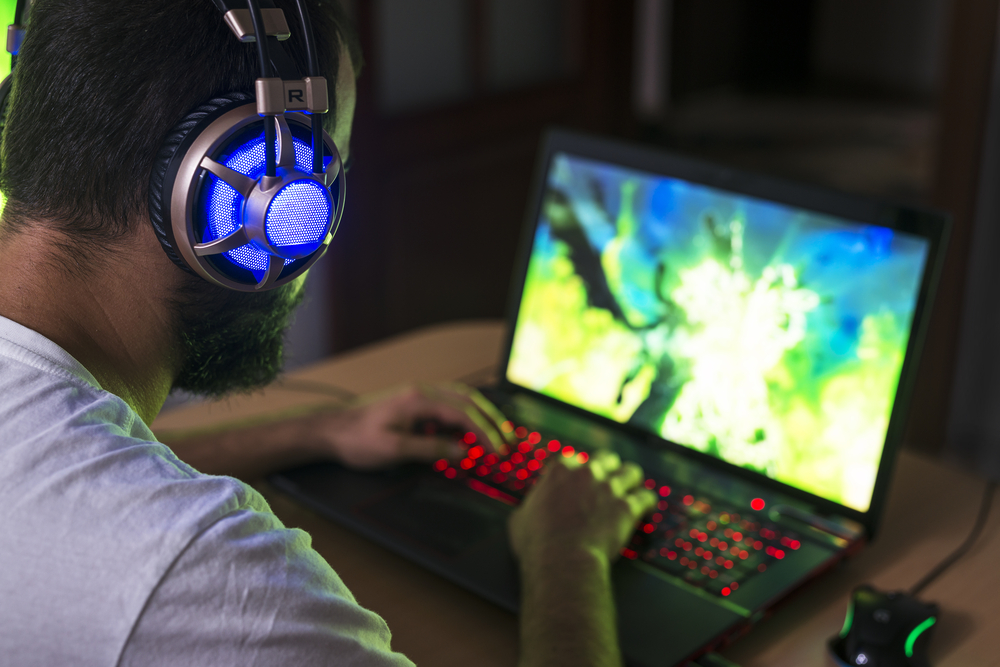
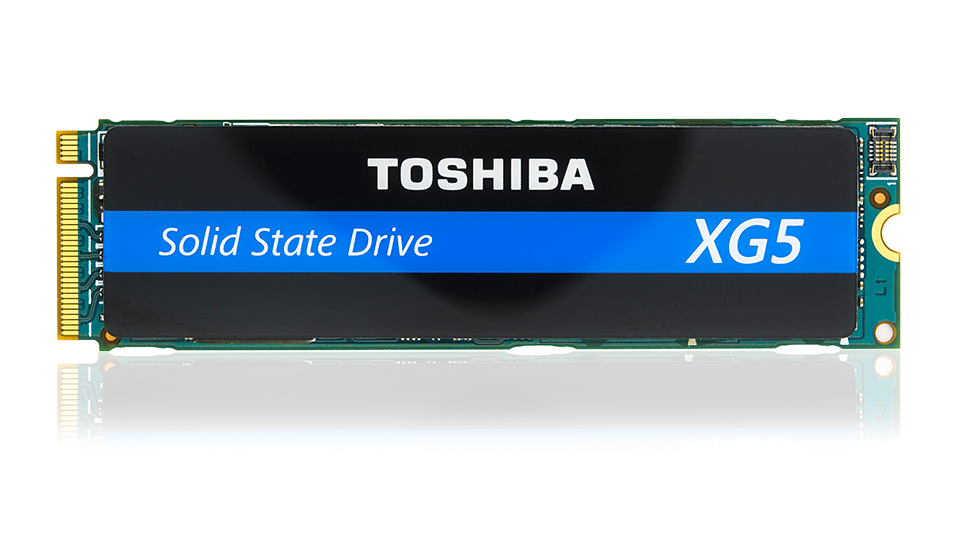
Are you a Pro Gamer or eSports athlete? If you are, then you must be as excited as I am with the cool gaming laptops that were recently showcased at last month’s CES event. These new gaming-centric platforms, like HP’s feature-rich Omen X laptop, matched with the Toshiba’s extreme performance one terabyte[1] PCIe™ NVMe™ M.2 solid-state drive (SSD), provide PC gamers the most up-to-date hardware giving them the edge and mobility they need to compete in today’s competitive circuits.2
I’m not a Pro Gamer, but what I love best about the HP Omen X laptop is its intimidating destroyer-like design and ultra-fast responsiveness allowing 4K gaming with its 17-inch screen. This monster of a PC is customizable and features a turbo-like Intel® Core™ i7-7820HK and GTX graphic performance and dependability.3 Many gaming PCs include a 1TB PCIe NVMe SSD (a.k.a. flash storage from Toshiba) providing extreme performance capabilities and low-power features.
For some Pro Gamers, winning the $100K prize at an eSports tournament and the reputation as being the best is worth all of the practice. Watching lots of gameplay, analyzing best tactics and practicing for endless hours each day are some of the key habits of gaming champions. Top gamers need to gear up with one of the hottest gaming laptops, like the Omen X, to properly test their skills against the competition.
NVMe SSDs are taking over the PC space thanks, in part, to the role their "stick-of-gum" M.2 form factor plays. With their slimmer board designs and performance benefits, the current PCIe 3.0 interface bandwidth is like a five-lane freeway compared to SATA’s one-lane road.
Maximize Your Gaming Performance
Gamers know the basic principles of how to maximize their gaming performance. NVMe SSDs replacing SATA SSDs is a new storage trend in gaming laptops.3 This is not only because NVMe SSDs are about five times faster due to higher IO bandwidth and lower latency, but also because of their ability to boot in seconds.4 The 1TB of flash storage in the Omen X laptop allows for quick access to game and media libraries. Storing your OS and apps on an SSD as your primary storage delivers fast boots and amazing responsiveness.
SSDs for PC Gaming Minimizes Worry
SSDs are more reliable; they have no moving parts like HDDs, which tend to have mechanical failures. SSDs also require less power to operate than HDDs. They are durable as well as shock and vibration resistant meaning I don’t have to worry about losing my archived games and can instead focus on improving my game.
Upgrade your gaming laptop with Toshiba’s highly reliable and quality NVMe SSDs and have fun doing what you love as you experience the high-performance NAND memory and multiple gigabytes of throughput and latency.
1 Toshiba defines a megabyte (MB) as 1,000,000 bytes, a gigabyte (GB) as 1,000,000,000 bytes and a terabyte (TB) as 1,000,000,000,000 bytes. A computer operating system, however, reports storage capacity using powers of 2 for the definition of 1GB = 230 = 1,073,741,824 bytes and therefore shows less storage capacity. Available storage capacity (including examples of various media files) will vary based on file size, formatting, settings, software and operating system, such as Microsoft Operating System and/or pre-installed software applications, or media content. Actual formatted capacity may vary.
2 PCI Express and PCIe are trademarks of PCI-SIG. NVMe is a trademarks of NVM Express, Inc.
3 Forbes, December 24, 2016 – “Gift This, Not That: NVMe Vs. SATA Solid State Drive".
4 Toshiba internal SSD lab testing performance July 2017